Thailand boasts a proud and long-standing reputation for silver jewellery manufacturing that balances time-honoured heritage techniques with contemporary methods for dependable and scalable production. For jewellery designers and brands, this mix supports originality, repeatable quality and clear provenance when building a collection or expanding an existing range. Even as cultural traditions evolve, traditional silversmith skills in Thailand continue to shape how silver jewellery is designed and produced today.
The Legacy of the Thai Silversmith in Today’s Jewellery Market
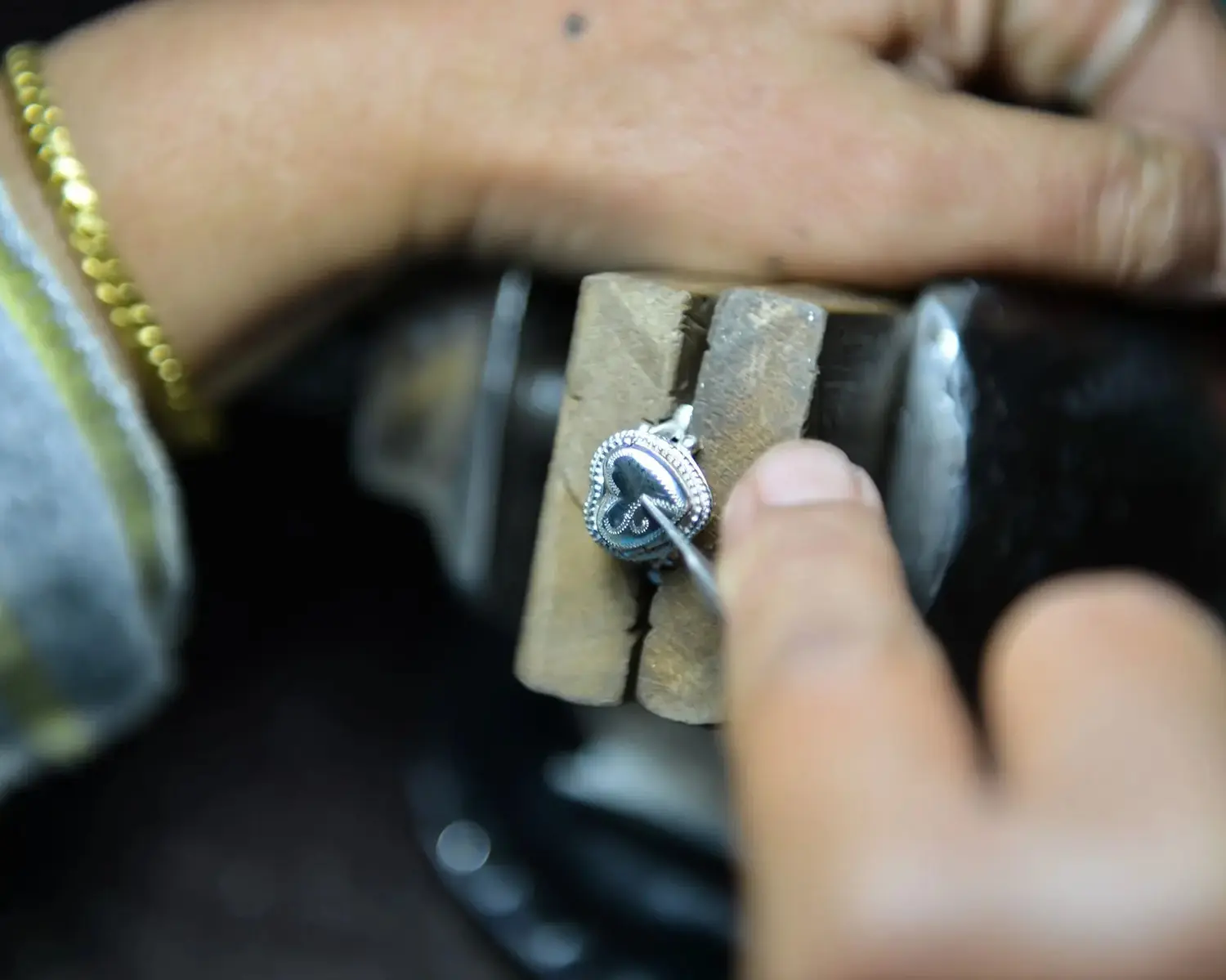
A Thai silversmith typically develops skills through years of hands-on apprenticeship. To date, core bench practices such as hand forming, soldering, finishing and surface detailing remain central to daily work. What’s shifted in recent decades, however, is the production environment. Many Thai artisans now work with international jewellery brands, producing from CAD files, wax models or detailed technical packs whilst continuing to hone their traditional bench methods.
This balance keeps traditional Thai silversmithing commercially viable and relevant. Heritage processes allow for distinctive surfaces and detailing that feel genuinely handmade, flexible production suited to bespoke pieces or limited runs, and faster feedback during sampling because decisions happen at the workbench. For brands, this means greater control over the final look without sacrificing production reliability.
When reviewing potential manufacturing partners, it helps to choose a workshop that can explain why a particular technique suits a design; not only how the production is carried out. That insight often leads to stronger results during both sampling and repeat orders.
Traditional Techniques Used in Thai Silver Jewellery Making
Traditional silversmithing in Thailand relies on a wide range of highly skilled techniques. Selecting the right method depends on product type, how the jewellery is intended to be worn, and the finish required. Numerous techniques are often combined within one piece, allowing artisans to balance structural integrity, surface detail and long-term wear.
- Hand forming and construction: Hand
forming is the process of shaping silver sheet and wire by hand to create
bands, frames, settings and structural components – and it lays the foundation
for Thai silver jewellery making. This method allows precise control over
thickness and proportion. Hand construction also supports adjustments during
sampling, as small changes can be made without retooling.
- Pattern-stamping and surface detail: Pattern-stamping
is widely used to introduce texture and decorative detail. Artisans work with
hand-cut stamps or custom punches to create repeating motifs across silver
surfaces. The depth of each strike affects how well the pattern holds after
polishing, so this stage requires careful planning. Pattern-stamping works
particularly well for bracelets, pendants, and designs that rely on tactile
finishes rather than gemstones.
- Silver hammering and planishing: Silver
hammering serves both functional and visual purposes. Through controlled hammer
strikes, silversmiths forge metal into shape, increasing strength while
introducing subtle surface variation. Planishing smooths the surface while
retaining character, making this technique suitable for statement pieces that
benefit from light reflection and organic texture.
- Hand finishing and final preparation: Hand finishing brings a piece together. Filing, burnishing and polishing define edges, refine surfaces, and achieve the intended finish - whether high polish, satin or oxidised. For brands sourcing jewellery from Thailand, this stage should be clearly defined within initial production discussions. Agreeing on finish standards, acceptable tolerances and sampling steps helps ensure consistency across batches. Traditional methods perform best when paired with detailed specifications and shared visual references.
Karen Silver Traditions in Northern Thailand and Their Use in Jewellery Collections
Karen Silver is associated with hill tribe craft traditions in Northern Thailand and is recognised for bold forms, tactile surfaces and its strong cultural identity. Pieces are often hand-built, with handmade silver beads and textured elements that emphasise weight and presence rather than fine uniformity.
For jewellery brands, Karen silver can suit collections that focus on craft-led narratives and slower production cycles. The handmade nature of the work supports storytelling around place, process and community, which can translate well on product pages and in brand communications.
When sourcing Karen silver, transparency is important. Brands should confirm where pieces are made, how materials are sourced and how makers are compensated. Repeatability also matters, so reference samples and agreed tolerances help maintain consistency over time. Respectful use of cultural motifs protects both the maker’s heritage and the brand’s reputation.
Chiang Mai as a Production Centre for Thai Silver Jewellery
Chiang Mai is widely associated with Thai silver production and training, supported by a network of skilled artisans and workshops where skills have been passed down from one generation to the next. From a brand perspective, the city offers access to traditional bench skills alongside practical production infrastructure.
Many workshops in Chiang Mai can support rapid sampling when briefs are clear and decisions are made early. Traditional artisans often specialise in techniques such as pattern-stamping, forming and bracelet construction, whilst nearby suppliers can support casting, stone setting and finishing where required.
To achieve consistent outcomes, production should be managed with the same structure used in any international supply chain. Clear specification packs, agreed silver purity, defined finishes and formal sample approvals all contribute to smoother production runs and fewer revisions.
How Technical Knowledge Supports Better Jewellery Production Decisions
A clear understanding of silversmithing processes supports stronger decision-making when jewellery production is outsourced. For designers and product teams, knowing how silver behaves during forming and soldering, how silver plating and solid silver differ in structure and wear [link to Difference Between Silver Plating and Solid Silver], and how finishing choices affect durability and appearance allows for more precise design planning.
This technical awareness leads to clearer briefs and more accurate expectations during sampling and production; equipping designers to specify thickness requirements, pattern depth and surface finishes. It also supports more effective communication with manufacturers, helping to minimise misunderstandings and maintain consistency across production runs.
Partnering with Thai Design Distributors for Silver Jewellery Production
Thai Design works with jewellery brands seeking reliable access to traditional silversmith skills in Thailand without the uncertainty that often comes with overseas production. With our in-house team of highly skilled silver artisans, we manage the process from early sampling through to repeat production, ensuring specifications, finishes and timelines remain aligned with your brand standards.
By combining on-the-ground manufacturing knowledge with clear communication, we help designers move from concept to production-ready silver jewellery with confidence. Please contact Thai Design to discuss your project requirements, production volumes and finish preferences, and to learn how ancient Thai craftsmanship can bring your next collection to life.