A growing desire for transparent and responsible material sourcing is reshaping expectations across luxury gold jewellery manufacturing. More so than ever, buyers want to see clearer proof of origin, more robust labour standards and a smaller environmental footprint. From our position as a Thai jewellery manufacturer, we recognise that jewellery brands working with gold are looking beyond price and lead times to ask harder questions about where their precious metals originate and how they are handled at each stage.
In the ethical gold sourcing industry, the direction of travel is clear: better transparency, better documentation, and better outcomes for people and place. Jewellery craftsmanship is a time-honoured cultural heritage of Thailand. Centuries of tradition have nurtured what is recognised today as an established international jewellery trade, where traditional craftsmanship synergises with contemporary manufacturing processes. This strong position in the global landscape offers Thai jewellery businesses like ours leverage to advocate for responsible procurement.
For designers, retailers and sourcing teams, the goal is practical: build a supply chain you can stand behind and communicate with confidence. This page explains what ethical gold sourcing involves, how sustainable materials are verified, and what due diligence looks like in real supplier relationships.
Thai Gold Craftsmanship Today: Heritage, Skill and Modern
Manufacturing
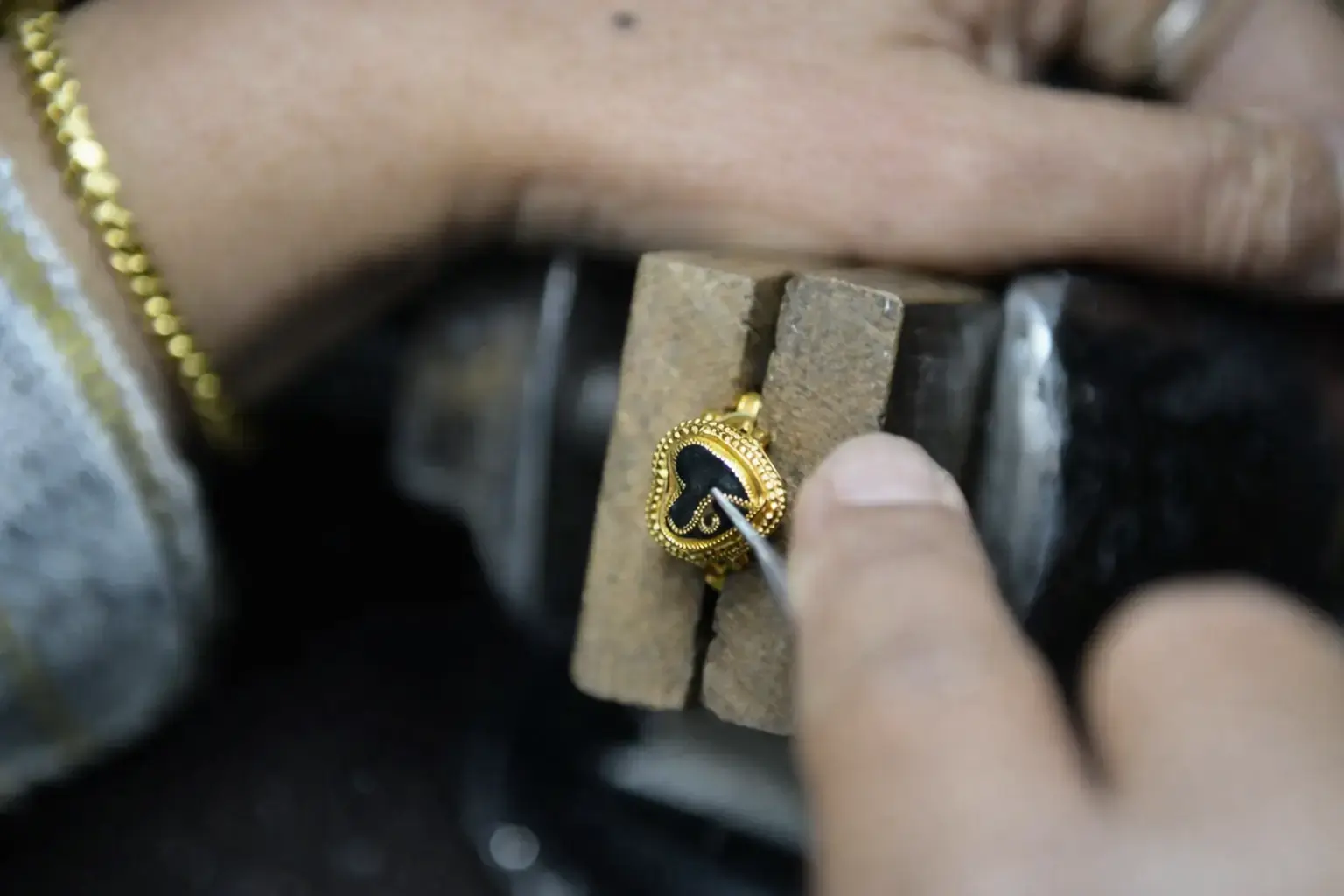
Thailand boasts a long and proud history of jewellery production. Worldwide, we’re known for detailed handwork like filigree, repousse and nielloware and a resilient artisan culture. Here, you can find specialist workshops experienced in working across various gold types. Our manufacturing facility in Chiang Mai balances traditional methods with modern production controls, so our partner brands can achieve consistent quality whilst maintaining hand-crafted character.
When your manufacturing partner can demonstrate clear working processes, controlled material handling and consistent finishing standards, it’s easier for you to manage traceability and reduce risk. In practice, responsible manufacturing in Thailand often includes:
- Clear separation of materials within the workshop, such as segregating recycled inputs from newly supplied gold
- Documented batches and job cards to track gold through casting, forming, setting, and finishing
- Waste management routines for filings and offcuts, supporting sustainability and cost control
For many brands, Thai gold work is appealing because it delivers fine detail at scale, with reliable turnaround times. When you pair that production capability with ethical sourcing expectations, Thailand becomes a leading contender for those who seek both high craftsmanship and stronger supply chain evidence.
If you’re evaluating a supplier or manufacturing partner, we recommend asking to see how their metal is logged on receipt, how it’s allocated to a job, and how scrap is captured and returned. Those operational details often reveal whether a workshop is set up for credible traceability.
What Ethical Sourcing Means in the Gold Sector
‘Ethical sourcing’ can lose meaning if it’s not clearly defined. In gold sourcing, it typically covers origin and legality, labour conditions, and environmental practice. A supplier does not need to meet every benchmark perfectly, but they should be able to show consistent steps, records, and ongoing improvements.
Common foundations of ethical sourcing include:
- Traceability and transparency: A
buyer should be able to trace gold back through suppliers and refiners, with
documents that match quantities and dates. Full mine-level traceability is not
always possible, but clear supply chain documentation is a minimum standard.
- Responsible labour practices: This
includes safe working conditions, fair wages, and respect for workers’ rights
across the supply chain. For many brands, social responsibility directly influences
sourcing decisions.
- Environmental impact management: Gold mining and refining can leave a heavy footprint. Responsible sourcing aims to reduce harm by advocating for stricter controls, cleaner chemical inputs where possible, and land rehabilitation in and around mines.
For jewellery brands, ethical sourcing should always begin as a procurement system rather than a marketing statement. Principled supplier requirements, document checks and periodic reviews all support a supply chain that can be explained clearly to customers and partners.
Sustainable Gold and the Mine-to-Market Supply Chain
There is no one-size-fits-all approach to responsible gold sourcing. For jewellery brands like yours, the correct route depends on available supply chain options, product positioning and customer expectations.
Responsibly Mined Gold and Recognised Standards
Where mined gold is used, recognised standards and third-party assurance can help reduce risk to people and planet. Fairmined, for example, is a certification system that focuses on improving outcomes for mining communities in the long-term. When a supplier refers to Fairmined practices, it’s reasonable to ask what evidence supports their claims and where their gold is sourced and refined.
Documentation for responsibly mined gold supply chains often includes refinery and supplier invoices, batch identifiers, transport records and declarations about origin and custody controls. For those licensed to work with Fairmined Gold – like us – it’s easy to support credible origin stories with paperwork on request.
Recycled and Recovered Gold
As an alternative to mined gold, recycled gold is widely used to reduce demand for new material. The term can be used loosely, so it’s important to ask your supplier or manufacturer whether their ‘recycled’ gold is post-consumer, industrial recovered or from mixed sources. Any claim should of course be supported with any documentation available – though unlike traceable mined gold, not all recycled gold comes with such paperwork.
What Strong Traceability Looks Like in Practice
Effective traceability usually relies on watertight systems rather than single documents. Indicators include a clear supplier chain, consistent records that reconcile weights and purity, defined processes for issuing gold into production, and written policies for scrap handling and returns.
When these basics are in place, sustainability claims become easier to support, and customer-facing messaging becomes safer. Thailand’s experienced jewellery manufacturing sector often provides a solid foundation for these systems.
Social and Environmental Responsibility: What Jewellery Brands Should Look For
Gold sourcing decisions affect miners, workers, communities, and local environments. For jewellery brands, this has ethical and commercial implications - particularly as an increasing number of consumers expect proof of responsible practice. If you’re evaluating one ethical gold option over another, here are some important factors we recommend seeking:
- Community outcomes and fair wages: Social
responsibility usually focuses on worker welfare, fair pay and investment in
education or business development within communities. Look for policies
covering wages, hours, safety, and training and protective equipment. Suppliers
should be able to explain their approach to you clearly, even when detailed
payroll data is confidential.
- Environmental footprint and risk controls: Environmental responsibility can appear at mining, refining, transport and workshop stages. A responsible supplier should be able to discuss waste handling, chemical management, energy use awareness and measures that prevent contamination or loss.
Responsible Sourcing Checks for Brands and Retailers
If sustainability is referenced in marketing or product descriptions, internal records should support those claims. As a jewellery brand, ensuring this alignment helps to avoid greenwashing and strengthen your responses to customer, retailer or media enquiries.
Consistent checks with potential suppliers or partners reduce risk, improve supplier comparisons and support long-term relationships built on transparency.
Your practical supplier review may include questions such as:
- Can you provide invoices and refinery details for gold sourcing?
- Are weights, purity, and dates consistent across all records?
- How is gold received, logged, and issued to specific jobs?
- How is scrap captured, recorded, and refined or returned?
- What safety practices and worker welfare policies are in place?
- Which processes are completed in-house and which are subcontracted?
- What evidence supports any sustainability claims being made?
A strong Thailand-based partner like Thai Design Distributors can support you with documentation, controlled production and clear communication. This combination helps designers and sourcing teams move forward efficiently while maintaining responsible standards.
Work with a Responsible Gold Manufacturing Partner in Thailand
If you’re planning a new jewellery collection and need a Thailand-based manufacturing partner with clear gold sourcing documentation, controlled workshop processes and consistent production standards, please contact Thai Design UK to discuss your requirements, timelines and sourcing expectations.